How to Clean Between Your Teeth Safely
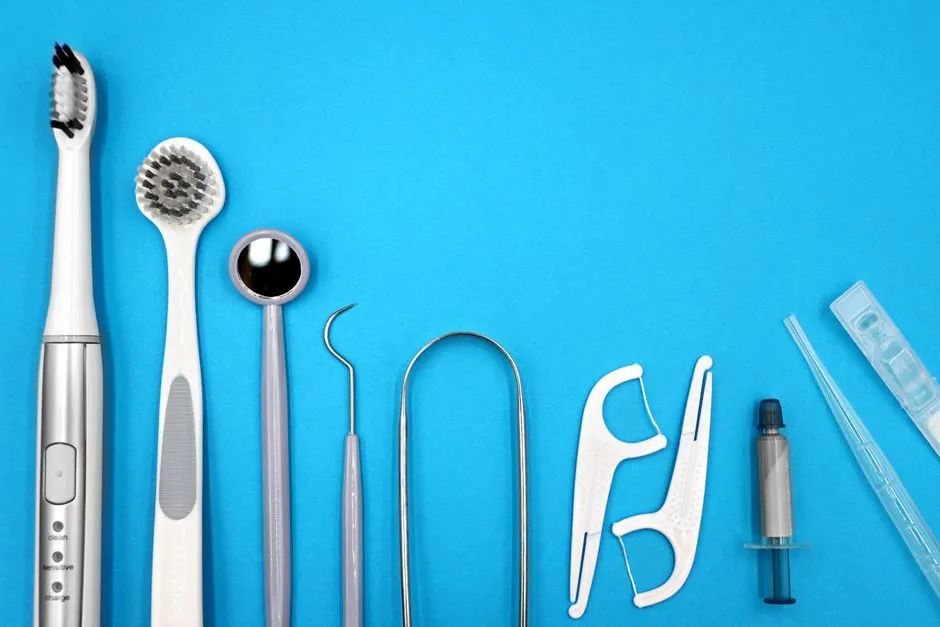
Clean between teeth once a day
Toothbrush bristles do not reliably clean the contacting sides between teeth. Mainstream dental guidance therefore includes daily interdental cleaning with floss or another tool suited to the space.
The right choice depends on tooth spacing, dexterity, braces, bridges, implants, and gum condition. A dentist or dental hygienist can demonstrate technique and select sizes. Never force a tool through a space simply because it worked elsewhere in your mouth.
Use string floss with a C shape
Break off a manageable length of floss and wind most around a finger on one hand, leaving the other hand to collect the used section. Keep a short segment taut between the fingers.
Guide the floss through a contact with a gentle side-to-side motion. Do not snap it downward into the gum. Once it passes the contact:
- curve it around one tooth in a C shape;
- slide it gently up and down along that tooth's side;
- move just below the gum margin without forcing it; and
- curve around the neighboring tooth and repeat.
Use a clean section for the next space. Floss holders can help when reaching with both hands is difficult, though the same gentle contact and tooth-hugging motion still matters.
Size interdental brushes rather than forcing them
An interdental brush can suit spaces that accept it without force. Insert it gently and move it through the space according to its instructions. The wire or stem should not scrape painfully, and the brush should not buckle from being pushed.
One size may not fit the whole mouth. A hygienist can identify appropriate sizes and show the entry angle around dental work. Replace a brush when its filaments or wire become worn, and follow the package instructions for cleaning and reuse.
Do not substitute pins, sharp objects, or splintering wooden items for a dental cleaner. They can injure the gums or damage dental work.
Consider other interdental tools
Water flossers and powered interdental cleaners may help people who find string floss difficult or who have appliances. Choose a product with credible safety and effectiveness review, follow its directions, and use the lowest comfortable setting while learning.
A tool's convenience does not make it appropriate for every clinical need. Ask a dentist whether a water flosser, floss threader, single-tufted brush, or another aid fits your mouth.
Work around dental appliances carefully
Braces may require a floss threader, orthodontic floss, a small interdental brush, or another aid recommended by the orthodontic team. Bridges and implants also have surfaces that ordinary floss may not reach in the usual way. Do not pull forcefully against wires, attachments, or restorations.
If hand movement is limited, a holder or powered tool may make daily care more manageable. Bring the device to an appointment so a hygienist can check your grip, angle, and coverage rather than relying on trial and error around delicate dental work.
Build a repeatable sequence
Pick a daily time when you are unlikely to rush. Some guidance recommends cleaning between teeth before brushing, while the larger priority is performing both tasks thoroughly and consistently. If you brush afterward, use fluoride toothpaste and spit out the excess rather than immediately rinsing it away.
Review correct toothbrushing technique so the two parts of the routine work together. Explore tool choices and access tips in Between-Teeth Care.
Respond carefully to bleeding or pain
Snapping floss or forcing an oversized brush can injure tissue. Stop that motion and return to gentle technique. Do not assume persistent bleeding is merely a sign that cleaning is working, and do not use an online guide to diagnose its cause.
Arrange a dental assessment for bleeding that persists, is heavy, happens without cleaning, or appears with pain, swelling, loose teeth, discharge, a bad taste, or another concerning change. Repeated floss shredding or a new snag also deserves evaluation because a dentist can check the contact and nearby dental work.
If an area is too painful to clean, contact a dentist rather than repeatedly probing it. Swelling that interferes with breathing or swallowing needs emergency care.