How to Floss With Braces or a Fixed Retainer
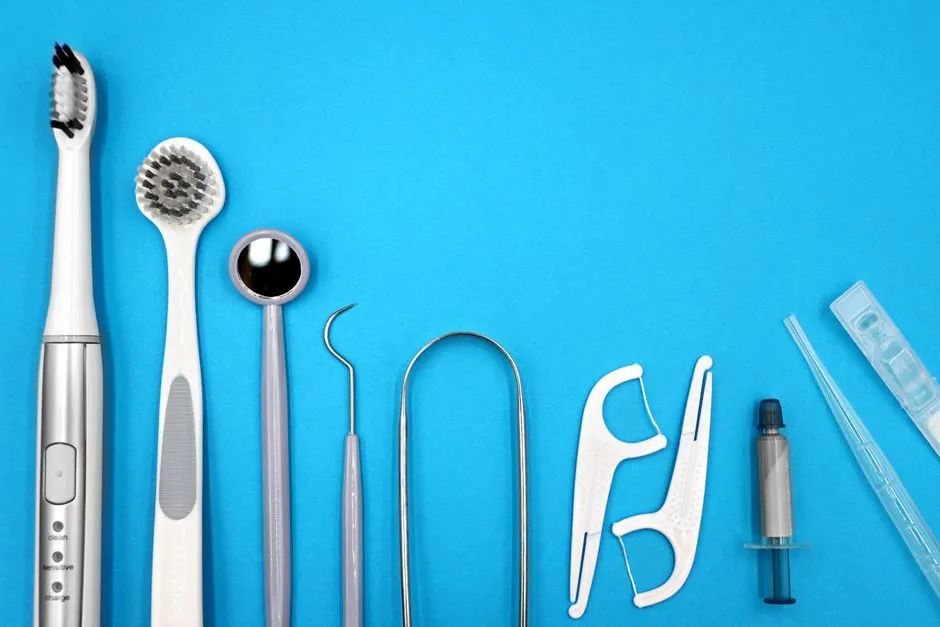
- How do you floss when a wire blocks the usual path?
- What changes with braces or a bonded retainer?
- What should the dental team demonstrate?
- How does a floss threader help with fixed braces?
- What should the floss do once it reaches the teeth?
- Where do interdental brushes fit?
- How often should you clean, and does this replace brushing?
- What should you do when access is difficult?
- When is this a dental or emergency problem?
- Sources
How do you floss when a wire blocks the usual path?
With fixed braces, a floss threader can guide floss beneath the archwire so you can clean the adjacent tooth surfaces gently. A fixed retainer needs its own demonstrated access route. Ask your orthodontist or hygienist to select the tool and show you the technique. Never force floss against hardware or through pain. Contact the dental team about bleeding, soreness or loose components; breathing or swallowing difficulty needs emergency care.
This guide concerns teenagers and adults with fixed appliances. It is general hygiene education, not a diagnosis, a repair procedure or permission to alter a prescribed treatment plan.
What changes with braces or a bonded retainer?
Brackets are attachments on the teeth, connected by the archwire. The NHS braces guide describes that arrangement. A wire can obstruct the route you previously used to bring floss between teeth; cleaning visible brackets does not by itself complete between-teeth cleaning.
A fixed retainer is different. The American Association of Orthodontists, or AAO, describes it as a custom-fitted wire bonded to the tongue-side of teeth and placed and removed by the orthodontist. It is not a removable appliance to take out for cleaning.
Ask which surfaces and spaces you must reach with each tool. Do not assume an instruction for threading around front-facing braces also describes every bonding point behind a fixed retainer.
What should the dental team demonstrate?
Bring the actual floss, threader or brush you intend to use. Ask the clinician to show the access path on your own appliance, then check that you can reproduce it comfortably under supervision.
Confirm three separate details:
- Access: Where does the threader pass, and which hardware must remain undisturbed?
- Cleaning: How does the floss contact each neighboring tooth once it is in position?
- Removal: How is the strand withdrawn without pulling against the wire or attachments?
Keep a short note of the product and demonstrated route. “Thread under wire” may remind an experienced user what to do, but it is not enough if you cannot identify which space the clinician meant.
Tell the team if hand control, visibility or reaching the back teeth is difficult. Ask for an adapted tool or demonstration rather than repeating an unsuccessful attempt with more force.
How does a floss threader help with fixed braces?
A floss threader is a flexible dental tool with a loop that carries floss. It is not the cleaning strand itself, and a sewing needle is not a substitute.
Oral-B's braces-flossing guide, updated December 2025, describes this sequence: use approximately 18–24 inches of waxed floss, pass it through the threader's loop, guide it under the archwire, and bring the floss through. The manufacturer then describes controlled, gentle movement along the tooth surfaces and rethreading for the next space.
Treat that as a manufacturer-described method, not a claim that one product fits every appliance. Use the route your orthodontic team has demonstrated. Do not insert a threader into tissue, force a blocked passage or pull it against a bonded attachment.
For withdrawal, the same guide emphasizes gently unthreading rather than popping the floss out against the wire. If it catches, stop pulling and contact the orthodontic team for instructions. Do not cut or detach hardware to release it.
What should the floss do once it reaches the teeth?
The American Dental Association's MouthHealthy instructions distinguish tooth-surface cleaning from snapping a strand into the gums.
Guide the floss gently between the teeth. At the gumline, curve it into a C against one tooth and slide gently into the space between that tooth and gum. Keep contact with the tooth, slightly away from the gums, while moving up and down along its shape, then clean the facing surface of the neighboring tooth. Do not snap into the gum.
Work through the areas included in the demonstrated plan. Cleaning one side of a space is not the same as cleaning both facing tooth surfaces. Ask for help if you cannot maintain controlled contact; this article cannot check your movement or the appliance's condition.
Where do interdental brushes fit?
The NHS braces guide recommends daily cleaning between teeth and underneath braces with an interdental brush. Its general cleaning guidance says a brush should fit snugly and directs individual method questions to a dentist or hygienist.
Have the team select the size and show whether it is for a gap between teeth, a space around the appliance, or both. Those locations should not be treated as interchangeable. Do not force the wire through a gap or bend appliance components to create access.
Our interdental-brush guide explains product-specific fit and movement. It does not replace an orthodontic demonstration. A fixed retainer may also require these brushes; confirm the route around its individual bonding points.
How often should you clean, and does this replace brushing?
The AAO's orthodontic hygiene guidance includes flossing at least once daily and using the interproximal brush supplied by the orthodontist. Confirm how that applies to the tools selected for your mouth.
Between-teeth cleaning does not remove the brushing step. The NHS braces page advises fluoride toothpaste in the morning, at night and after meals, alongside regular dental checkups. Follow the dental team's individualized instructions rather than substituting a general non-orthodontic schedule.
Keep ordinary toothbrushing information in brushing basics, and the appliance-specific instructions with your cleaning supplies. Do not change prescription products or appliance wear because a different routine appears online.
What should you do when access is difficult?
Use these original communication examples to describe the problem, not diagnose its cause:
| What you observe | What to report | What not to assume |
|---|---|---|
| Floss catches at one location | The location and when it catches | That pulling harder will make the route suitable |
| You cannot reach behind the retainer | Which area is inaccessible with the current tool | That the wire can be lifted or removed at home |
| A bracket or wire feels loose | Contact the orthodontic team promptly | That cleaning can continue as though nothing changed |
The AAO advises calling as soon as something is broken or loose. Follow the team's instructions while awaiting review. This guide supplies no wire-cutting, bending, bracket-removal or adhesive procedure.
An unresolved access problem should remain a question for the team, not a blank area you silently omit from every future routine.
When is this a dental or emergency problem?
Contact a dentist about bleeding, painful or swollen gums; the NHS gum guidance recommends assessment. Do not diagnose the cause or wait through a self-chosen adjustment period. Stop the motion that hurts and ask how to maintain hygiene safely.
Intense dental pain or suspected infection needs urgent dental advice. NHS emergency guidance directs immediate care for difficulty breathing, speaking, swallowing or opening the mouth; substantial mouth swelling; a swollen or painful eye; or sudden eyesight problems. In the UK, call 999 or go to A&E without driving yourself; elsewhere use local emergency services.
Changing floss, adding a rinse or removing a wire is not treatment for those symptoms. The between-teeth care section supports routine education; individual assessment remains with qualified professionals.
Sources
Primary pages linked above were opened and read on 8 September 2026: NHS braces, general cleaning, gum and emergency guidance; AAO orthodontic hygiene and fixed-retainer information; ADA flossing technique; and Oral-B's manufacturer-described threading method. No product trial, clinical examination or appliance repair was performed.